
The idea sounds simple enough. Hook someone up to a machine, ask a few questions, and the truth comes out. Clean, objective, almost scientific. That’s the promise people imagine when they hear “polygraph test.”
Reality? It’s a bit messier than that.
Polygraphs have been around for decades, used in criminal investigations, job screenings, even reality TV. Some swear by them. Others don’t trust them at all. If you’ve ever wondered whether they actually work—or what’s happening behind the scenes when someone’s strapped into one—there’s more to unpack than you might expect.
Let’s walk through it in plain terms.
What a Polygraph Test Actually Measures
Here’s the thing: a polygraph doesn’t detect lies. Not directly.
What it measures is your body’s response to stress.
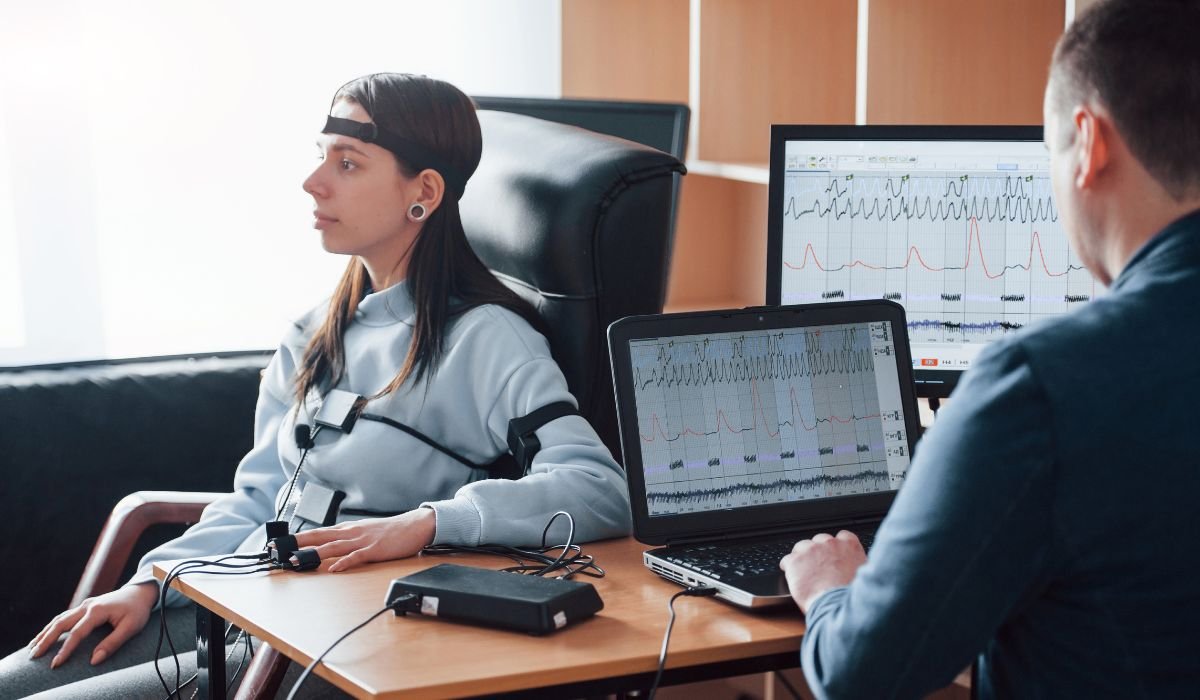
When you’re connected to a polygraph machine, several things are being tracked at once. Your heart rate. Breathing patterns. Blood pressure. Sometimes even skin conductivity—basically how sweaty your palms get.
The idea is that when people lie, they get nervous. And when they get nervous, their body reacts.
Sounds reasonable, right?
But now think about this: people get nervous for a lot of reasons that have nothing to do with lying.
Imagine sitting in a quiet room, wired up to sensors, knowing your answers could have serious consequences. Even if you’re telling the truth, your heart might still race a little. Your breathing might change. That doesn’t automatically mean deception.
That’s the core tension with polygraphs. They don’t measure lies—they measure reactions.
The Experience of Taking One
If you’ve never seen a polygraph test in real life, it’s less dramatic than movies make it seem. No flashing lights. No dramatic countdown.
You sit across from an examiner, usually in a quiet office. They explain the process. Then comes a pre-test phase where they go over the questions in advance.
That part surprises people.
You don’t just get hit with unexpected questions. In most cases, you already know what’s coming. The examiner wants consistency in how you respond.
Then the sensors go on. Chest straps for breathing. A cuff for blood pressure. Small sensors on your fingers.
And then the questioning begins.
Some questions are neutral. Things like, “Is your name John?” Others are what they call “control questions”—designed to provoke a reaction. Then there are the relevant ones, the ones that actually matter.
The examiner watches how your body responds across all of them. They’re not just looking at one spike—they’re comparing patterns.
It’s less about a single moment and more about how your responses differ across questions.
Why People Still Believe in It
Despite all the criticism, polygraphs haven’t disappeared. Not even close.
Law enforcement still uses them. Some government agencies rely on them for screening. Private employers in certain industries do too.
Why?
Part of it is psychological.
Even if the machine isn’t perfect, the belief in it can be powerful. When someone thinks the test will catch them, they might confess before it even starts. Or during it.
That’s actually one of the biggest reasons polygraphs stick around. They’re not just tools for measuring responses—they’re tools for creating pressure.
Picture a scenario: someone’s been hiding something. They’re told they have to take a polygraph. Suddenly, the weight of that lie feels heavier. The idea of being “caught” becomes real, even if the test itself isn’t foolproof.
People crack under that pressure more often than you’d think.
The Accuracy Debate
Now we get to the part that divides opinions.
Ask ten experts whether polygraphs are reliable, and you won’t get ten identical answers.
Some studies suggest accuracy rates around 80–90% under controlled conditions. Others argue it’s much lower in real-world settings. Critics point out false positives—where truthful people are flagged as deceptive—and false negatives, where liars slip through.
And those errors matter.
Imagine being completely honest, but your body reacts in a way the machine interprets as suspicious. That’s not a small issue. That’s potentially life-changing, depending on the context.
Courts, for example, are often skeptical of polygraph results. In many places, they’re not even admissible as evidence.
That alone tells you something.
If a tool were consistently reliable, it would carry more legal weight. The fact that it doesn’t speaks volumes.
Can You Beat a Polygraph?
This is one of those questions that comes up a lot, and the answer isn’t as straightforward as people hope.
Technically, yes—there are ways people have tried to manipulate the results.
Some try to control their breathing. Others use mental tricks, like deliberately stressing themselves during control questions to blur the comparison. There are even stories of people using physical tactics, like pressing their toes into the floor to create artificial reactions.
But here’s the catch.
Experienced examiners are trained to spot these attempts. They’re not just staring at a machine—they’re observing behavior, timing, and patterns.
Also, trying to “beat” the test can backfire. If your responses look inconsistent or unnatural, that alone can raise suspicion.
So while it’s not impossible, it’s definitely not as simple as following a trick you read online.
When Polygraphs Get It Wrong
Let’s ground this in something real.
There have been cases where innocent people failed polygraph tests. And not just obscure ones—high-profile investigations where the results later turned out to be misleading.
Imagine being in that position. You know you’re telling the truth, but the machine says otherwise. Now you’re under suspicion, not because of evidence, but because of how your body reacted under pressure.
It’s uncomfortable, to say the least.
On the flip side, there are cases where guilty individuals passed.
That’s the part that makes people uneasy. Because if both outcomes are possible, it raises a bigger question: how much weight should we really give this test?
Why Emotions Complicate Everything
Human emotions aren’t neat or predictable.
Some people stay calm under pressure. Others get anxious over the smallest things. One person might lie smoothly without breaking a sweat, while another might panic telling the truth about something minor.
Polygraphs assume a fairly consistent link between lying and stress. But real human behavior doesn’t always follow that rule.
Think about someone who’s naturally anxious. Job interview? Nervous. Doctor’s visit? Nervous. Polygraph test? Very nervous.
Now compare that to someone who’s used to high-stress situations—or someone who simply doesn’t react strongly on the surface.
Those differences alone can skew results.
The Role of the Examiner
The machine gets most of the attention, but the examiner plays a huge role.
They’re the ones interpreting the data. Deciding what counts as significant. Guiding the questioning process.
Two different examiners might look at the same data and reach slightly different conclusions.
That human element adds another layer of subjectivity. It’s not purely mechanical. Judgment is involved.
And like any field that relies on judgment, there’s room for disagreement.
Where Polygraphs Still Make Sense
For all the criticism, polygraphs aren’t completely useless.
They can be effective as part of a broader process. Not as a standalone truth machine, but as one piece of the puzzle.
In some cases, they help guide investigations. In others, they prompt confessions or clarify inconsistencies.
Used carefully, they can provide insight. Used blindly, they can mislead.
That distinction matters.
Should You Trust a Polygraph Test?
If you’re looking for a simple yes-or-no answer, you won’t find one here.
Polygraphs sit in a gray area.
They’re not magic truth detectors. But they’re not entirely meaningless either.
A better way to think about them is this: they’re tools that measure physiological responses under questioning. Those responses can suggest something—but they don’t prove it.
Context matters. Corroborating evidence matters. Human judgment matters.
If someone treats a polygraph result as absolute proof of truth or deception, that’s where problems start.
The Bottom Line
Polygraph tests carry a certain mystique. The wires, the charts, the idea of a machine uncovering hidden truth—it’s compelling.
But once you look closer, it’s less about detecting lies and more about interpreting stress.
And stress, as we all know, isn’t a reliable storyteller.
That doesn’t mean polygraphs have no value. It just means they need to be handled with care, skepticism, and a bit of common sense.
Because at the end of the day, no machine can fully untangle the complexity of human behavior. Not yet, anyway.